How to publish a medical book: what one pathologist's first week on Amazon shows
How to publish a medical book while you still practise: interviews, chapters you approve, and a category choice, shown by one pathologist's Amazon launch.
By Abdullah Mansoor · · Updated
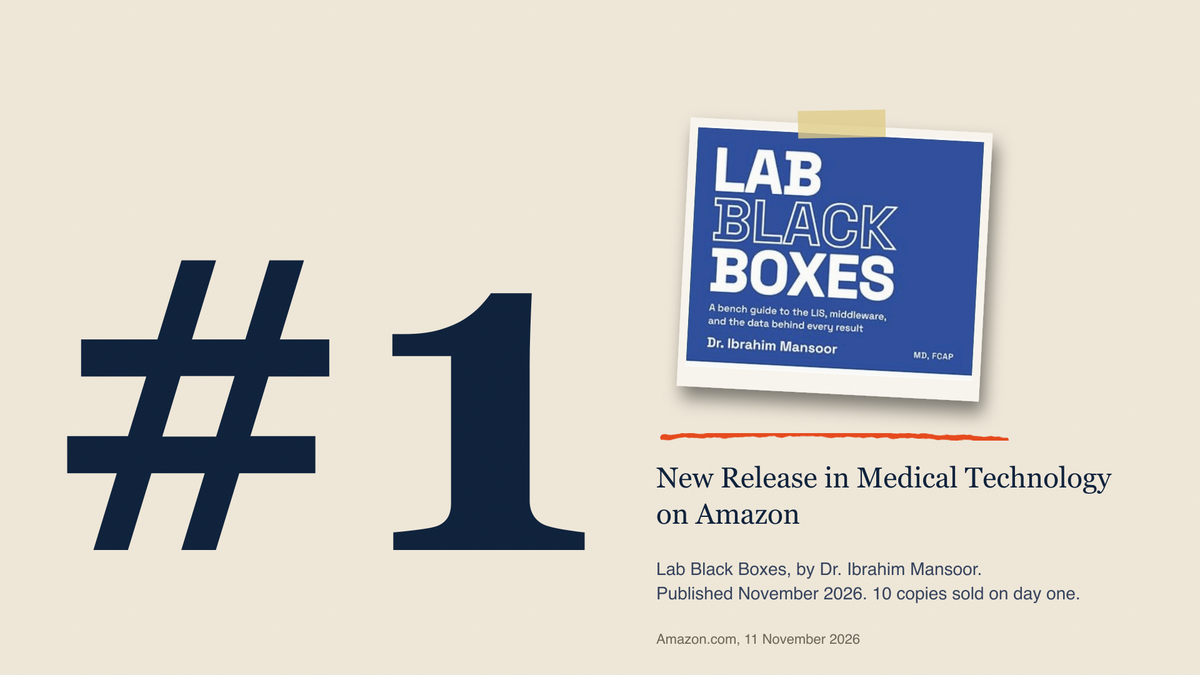
If you want to know how to publish a medical book while you still practise, the short answer is this: capture what you already teach at the bench or the bedside, let a team shape it into chapters, approve every page yourself, then publish on Amazon in your field's category. Dr. Ibrahim Mansoor's Lab Black Boxes reached Amazon on November 6, 2026. Five days later it sat at #1 of the new releases in Medical Technology.
In this article: how a working pathologist turned his teaching into a 331-page book, what his first week on Amazon did and did not mean, and the choices you can copy for your own book.
Which medical book did a working doctor publish, and who is it for?
Lab Black Boxes: A bench guide to the LIS, middleware, and the data behind every result is a 331-page paperback for laboratory technologists, supervisors and pathologists. It opens the systems every lab result passes through before it reaches a doctor: the analyzer, the middleware and the laboratory information system. Our Lab Black Boxes book page walks through what each part covers.
The author is a working clinician. His Amazon page says he trained in the United States with fellowships at Yale and Mayo Clinic, leads laboratory medicine and pathology at a hospital in Jeddah, and has published more than 50 papers.
Why do most doctors never finish a medical book?
Time is the obvious answer, and it is only half of it. The bigger gap is format. A doctor's knowledge lives in how they explain a case to a trainee, not in chapter outlines. Sitting down to type it from scratch turns a teacher into a writer, a job they never trained for. Many find their first readers through posts long before the book; see LinkedIn content for doctors.
So the book waits. Some physicians carry the same idea for years: a guide their trainees keep asking for, written in plain language, that no textbook covers.
How does Inkly help a working doctor finish a book?
The knowledge came from him; shaping it into a book was our job as his book development partner. The way Inkly works with experts has four steps:
- Interviews, not typing. Short conversations of 20 to 25 minutes, each on one part of the subject.
- Chapters from the expert's own words. Our writers turn what was said into chapters that keep the expert's examples and way of explaining.
- The expert approves every chapter.
- A last full read. For Lab Black Boxes, the finished manuscript of about 90,000 words went back to Dr. Ibrahim with freedom to change any line. He changed about 1.5%.
That last number matters more than the rank. A 1.5% change on a final read means the pages already sounded like him.
AI tools help with research and grammar; people do the interviews, writing, editing and judgment, and the author approves every chapter.
What happened in the first week on Amazon?
The book was published on November 6, 2026. Ten copies sold on the first day. By November 11 it carried Amazon's #1 New Release badge and led the new releases list for its category, Medical Technology.
Does #1 New Release mean the book is a top seller?
No, and it is worth being exact about it. Amazon's KDP help page on sales ranking says rankings are relative and can change even when a book's level of activity stays the same. A new-release rank compares a book only with recent releases in one category. We unpack the badge in what #1 New Release on Amazon means.
So we treat it as what it is: a dated screenshot of a good week, not a promise about next month. What moves sales after launch is covered in growing Amazon sales after launch. If someone promises your medical book will top the charts, ask what list, what category and on which date.
How do you choose where a medical book sits on Amazon?
Amazon files every book into categories, and a narrow category is where a specialist book gets seen by the right reader. A bench guide for lab teams sits next to other laboratory and medical technology titles, not beside general health books.
Two practical checks help. First, search Amazon for the three or four books your reader already owns and note the categories on their product pages. Second, make sure the title and subtitle say plainly what the book does. Lab Black Boxes carries its whole promise in the subtitle: a bench guide to the LIS, middleware and the data behind every result.
What can you take from this for your own book?
- Pick a narrow reader. Lab Black Boxes serves lab teams, not "everyone in healthcare". A clear reader also puts the book in a clear Amazon category.
- Start from what you already explain. The questions trainees ask you every month are your table of contents.
- Keep approval with you. Your name is on the cover, so every chapter should pass your review.
- Plan what the book is for. For many specialists it opens doors to talks and referrals; see a book as a lead magnet for consultants.
- Measure the right thing. Ranks move. Your sign-off on your own words does not.
Still working out how to publish a medical book of your own? If you want to see how your subject could become one, Inkly offers a free draft table of contents built from what you tell us. Request a free outline for your medical book. You can also read how this differs from hiring a ghostwriter for doctors and what nonfiction book publishing help usually covers.
Common questions
- How to publish a medical book without stopping clinical work?
- Yes. Dr. Ibrahim Mansoor leads laboratory medicine and pathology at a hospital in Jeddah, and his 331-page bench guide was published on Amazon on November 6, 2026.
- What does #1 New Release on Amazon mean?
- It means the book led the new releases list in its category at the moment the page was checked. Amazon's own help pages say ranks are relative and can change even when a book's level of activity stays the same, so it is a dated milestone, not a claim about overall sales.
- Who owns the words when professional help shapes the book?
- The author does. In this case the full manuscript of about 90,000 words went back to Dr. Ibrahim for a final read, he was free to change any line, and he changed about 1.5% of it.
- Does AI write the book?
- No. AI tools help with research and grammar; people do the interviews, writing, editing and judgment, and the author approves every chapter.
Related articles
- Ghostwriter for doctors: how to get your book written in short weekly interviews
Thinking of hiring a ghostwriter for doctors? What one does, the questions physicians ask first, how long a book takes, and what it asks of a busy doctor.
- Nonfiction Book Publishing Help: Four Routes and Who Owns What
Compare the four ways to publish a nonfiction book, spot the warning signs of a bad publishing company, and get five questions to ask any service first.
- How Much Does It Cost to Hire a Ghostwriter for a Book? The Five Things That Set the Fee
The cost to hire a ghostwriter for a book depends on length, research, interviews, revisions and publishing. See what moves the fee and how to compare quotes.
- Book Ghostwriter for Business Owners: Time, Rights and Fit
Hiring a book ghostwriter for business owners? See what your time really goes to, which contract clause keeps the copyright yours, and who should skip it.