LinkedIn ghostwriting for experts: what it is and how to keep your voice
LinkedIn ghostwriting for experts explained: what the writer does, why ghostwritten posts feel fake, what drives the cost, and how interviews keep your voice.
By Abdullah Mansoor · · Updated
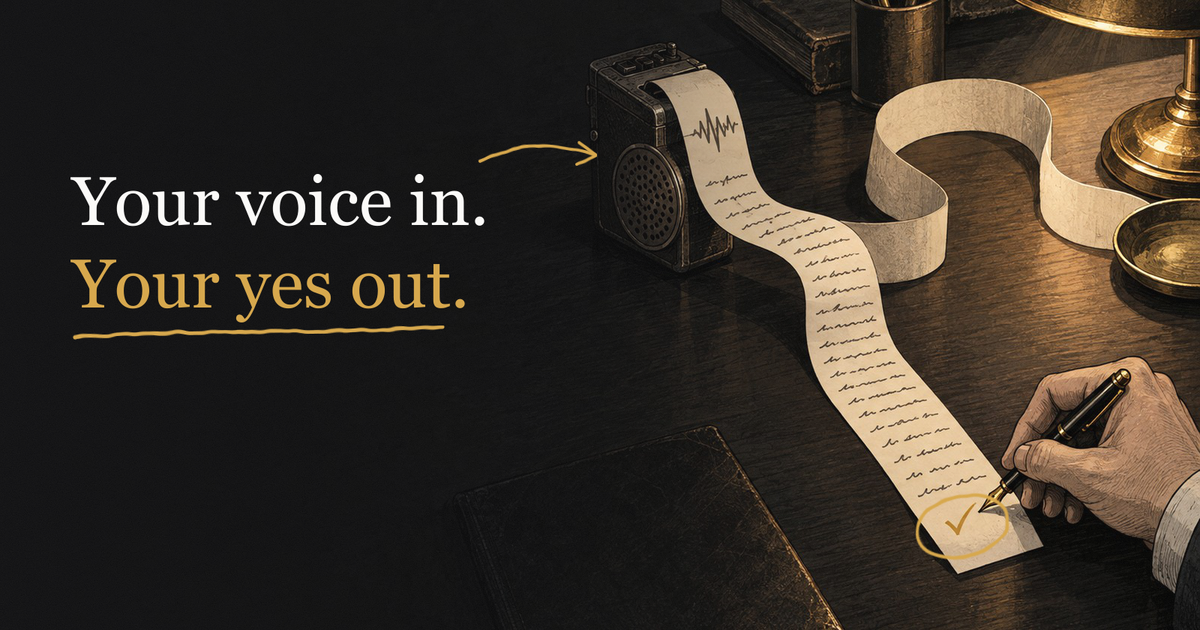
Someone else drafts the posts, and they go out under your name and photo. That is LinkedIn ghostwriting for experts, in one line. It usually breaks at the same point: the writer gets your topics but not your thinking, so the posts sound like everyone else in your field. The way to keep your voice is to reverse the order. You talk through real questions for 20 to 25 minutes, a team shapes your answers into posts, and none goes out until you approve it.
In this article: what the usual ghostwriting setup looks like and where it breaks, how talking first keeps your thinking in the posts, and how to judge worth, time and cost before you hire anyone.
What does LinkedIn ghostwriting for experts actually involve?
A common setup works like this. You fill in an intake form, share a few old posts, agree on themes, and maybe hold one kickoff call. The writer then sends a batch of drafts each week or each month. You skim them, and they go out on a schedule.
The pull is easy to see. A surgeon, a consultant or a professor has more to say than most people on the feed and almost no free hour to write it, so paying someone feels like the only way to post at all.
The weak point is the input. A form and a theme list tell the writer what you want to talk about. They do not tell the writer what you actually think, which cases shaped that view, or how you explain it out loud. The writer fills that gap with what is safe and general.
Why do ghostwritten LinkedIn posts feel fake?
The complaint that LinkedIn posts now feel fake comes up again and again, and ghostwritten posts are easy targets. To see why, follow one question through the usual process.
Say a client asked you last week whether to hire one senior person or two juniors. You answered from years of watching both choices play out, and you told her about one case you still think about, where the cheaper choice turned out to be the expensive one. That answer is the most useful thing you said all week.
Now look at what your writer has. The question was asked in a meeting they were not in. Your answer lives in your head and maybe in your notes. The case was never written down. So when your theme list says "hiring", the writer produces the version anyone could find in a search: a balanced list of pros and cons, a neat closing line, and nothing a reader could not have guessed.
Two versions of the same post
Here are two versions, both written as examples for this article, not real posts.
From a theme list: "Senior or junior hire? Seniors bring experience; juniors bring energy and a lower salary. The right choice depends on your stage."
From an interview: "A client asked me last week whether to hire one senior person or two juniors. I told her about a firm that chose the two juniors to save money. Within a year the founder was checking their work every night, and the saving had turned into his evenings."
What went wrong in the first one
Three things went wrong there, and each one is worth checking in any ghostwritten post:
- The opinion is guessed. Without hearing your reasoning on senior versus junior hires, the writer picks the safe middle view, which is also your competitors' view.
- The example is missing. Your edge is the case from your own work. A writer working from a brief never heard that story, so they borrow a famous quote or skip the example.
- The voice is averaged. A writer who has never heard you explain anything writes in their own rhythm or in the feed's. There is a longer list of checks for posts that keep your own voice if you want to test drafts yourself.
How do you keep your voice when someone else writes?
Change where the material comes from. Instead of a theme list, the writer starts from a recording of you talking.
Inkly runs short interviews with you and turns them into LinkedIn posts plus longer written pieces that sound like you, and you approve each piece before it is posted. Each conversation lasts 20 to 25 minutes and is recorded, so the team works from your own sentences rather than from someone's notes of what you meant. The useful questions are the ones from your real week: a decision you made, a mistake clients keep making, a question you answer every Monday.
Go back to the hiring question. In an interview it gets asked out loud, and you answer it the way you answered the client, case included. The team then cuts and orders that answer into a post, so your case stays in it and the phrasing stays close to how you speak. When the draft reaches you, you can approve it, mark the lines that are not how you would say them, or drop it. If a client detail should not be public, you take it out before anything is posted.
So the split of work is plain. You bring the thinking, the cases and the final decision. The team does the structure, the drafting and the editing.
Is LinkedIn ghostwriting for experts worth it?
What buyers say they want
It is worth it when the posts carry your thinking, because that is what buyers of expert services are judging. The 2024 Edelman and LinkedIn B2B Thought Leadership Impact Report surveyed "nearly 3,500 management-level professionals across seven countries." Its summary says that good thought leadership does more than raise awareness: "Done well, it makes buyers reexamine their assumptions." The same page says it makes people "more willing to seek you out" and "even pay extra for your expertise."
A generic hiring post, with its balanced pros and cons, repeats what the reader already believes. The post with your case in it can make them reexamine their assumptions, because it shows a cost they had not counted.
Now follow your version forward. Months later, a founder facing the same choice remembers it, writes to you, and opens the first call by asking how the two-junior story ended. That call starts from your thinking, not from your rates. No single post can be counted on to do that, but the generic one gives a reader nothing to remember you by.
Time to result and cost
Time to result. Expect it to be slow, and plan for that. LinkedIn's B2B Institute, in its 95-5 Rule research, reports that 95% of potential buyers are not ready to buy today. Its examples: 75% of companies buy computers once every 4 years, and 80% change banking services once every 5 years. It also found that 96% of B2B marketers expected their ad campaigns to show their main effect within 2 weeks, and calls that belief "a myth."
That research is about advertising, but the timing logic carries over to posts. Most people who read you this month will not need you this month, so a post earns its keep when they remember it later.
Cost. Inkly prices this service on a call, not from a public list. For one person comparing any services, the number moves mainly with volume and input: how many posts arrive each month, whether long-form articles come with them, and whether the writer learns your view from a form, a single call or recorded interviews. Two smaller things matter too, the rounds of changes you get and who presses publish. Compare on those, not on the headline number alone.
If you are still deciding whether the model suits you at all, start with a plain explanation of what LinkedIn ghostwriting is.
Who should skip LinkedIn ghostwriting?
Four signs this is the wrong service for you:
- You enjoy writing and have the hours. Then write your own posts.
- You want posts without reading them. A service built on interviews needs your time for the interviews and your judgment on every draft. If you would rather hand over the angles and have posts go out without asking, a classic ghostwriter suits you better, and you carry the risk of posts that read as if someone else wrote them.
- Nothing from your work can be shared. You decide what goes public, but if every case is confidential and you cannot even describe one without details, posts will stay thin whoever writes them.
- You need clients in two weeks. See the 95-5 numbers above. Posting is a long game, and we do not promise reach, followers or leads.
What should I ask a LinkedIn ghostwriter before hiring one?
Ask these of anyone who will write under your name, whatever they call the service.
- What are the ideas built from? A theme list, or your own spoken answers?
- What does it cost you in time? Add up the interview hours and the reading time.
- Who approves each post? If a post can be published before you have said yes, you carry the risk under your own name.
- Who decides what is shared? Your cases and client details should never go out without your say.
- Can the same material go further? Posts are short. If you keep explaining one method, check whether the same interviews can feed long-form articles too, and one day perhaps a book.
Physicians weighing that last step face a version of the same choice between handing over the writing and keeping the thinking, set out in our piece on what changes when the expert is a physician. Authors who already have a book face the reverse problem, turning chapters into posts, which is the subject of a separate piece on an author's personal brand beyond the book. And if you are choosing for several people at one company rather than for yourself, the questions shift to roles and sign-off, which our piece on LinkedIn content for teams works through.
Consultants and founders have their own versions of these questions, covered in the guide for consultants hiring a LinkedIn ghostwriter and the piece on LinkedIn content for founders.
What is the next step?
A post that lands makes a reader curious about who wrote it, and the next thing that reader can open is your profile. They see the headline under your name, the About section and whatever you have featured. If the headline is a string of job titles and the featured section is empty, the post did its part and the page behind it did not.
You can fix that page whether or not anyone ever writes a post for you. Email hello@inklyai.io with the link to your LinkedIn profile, and we will send back written notes inside a few days on three parts of the page: the headline, the About text and what you feature. The suggestions are about how your page reads, not a forecast of reach or leads. Whether or not you hire for LinkedIn ghostwriting for experts, a clear profile helps every post you publish, and the review is free: ask for a free LinkedIn profile review.
Common questions
- What is LinkedIn ghostwriting for experts?
- A writer drafts LinkedIn posts that an expert publishes under their own name. How good the posts are depends on how much of the expert's real thinking reaches the writer: a topic list gives generic posts, real answers give posts that sound like the person.
- How is Inkly different from a LinkedIn ghostwriter?
- Inkly turns short interviews with an expert into LinkedIn posts and long-form articles in their voice; the expert approves every piece before it is posted. The ideas and the final say stay with the expert.
- How much does LinkedIn ghostwriting cost?
- It depends on scope, mainly how many posts you get each month, whether long-form articles come with them, and whether your input comes from a form or from interviews. Inkly discusses scope and price for this service on a call.
- How much of my time does an interview-based service take?
- Each interview runs 20 to 25 minutes and is recorded. After that, your time goes on reading drafts and approving, changing or dropping them.
- How long before LinkedIn posting brings clients?
- There is no reliable date to give you. LinkedIn's B2B Institute reports that 95% of potential buyers are not ready to buy today, so posts mostly reach people who will need you later. Judge it over a long stretch, not two weeks.
Related articles
- Personal Brand for Authors: Meaning, Examples and a Weekly Plan
What a personal brand for authors actually is, three real examples, who it does not suit, and a one-hour weekly plan built from your own book chapters.
- Ghostwriter for doctors: how to get your book written in short weekly interviews
Thinking of hiring a ghostwriter for doctors? What one does, the questions physicians ask first, how long a book takes, and what it asks of a busy doctor.
- LinkedIn content tool for teams: what to check before you pick one
Picking a LinkedIn content tool for teams? Check voice, approval, roles, employee advocacy and scheduling, and see when short expert interviews do more.
- What is LinkedIn ghostwriting? How it works, what it asks of you, and when it helps
What is LinkedIn ghostwriting? A writer drafts posts you publish as yourself. See the steps, LinkedIn's account rules, your time, and who should skip it.